Queen Elizabeth national park is Uganda’s most famous national park situated in the western part of the country with large variety of terrain including volcanic craters, acacia woodlands, savannah grasslands, swamps and tropical forests. Queen Elizabeth national park was established in 1952 as Kazinga channel national park but to commemorate the Queen of England’s visit in the country the parks name was changed to Queen Elizabeth in 1954, Queen Elizabeth is located in the western region of Uganda it’s surrounded by Kamwenge, Kasese, Rukingiri and Rubirizi districts. Its a great place for Uganda safari tours.

The park is approximately 400 kilometers by road south-west of Kampala the capital city of Uganda. Rubirizi is located outside the parks southeastern boundaries and Kasese town is located in the northeastern part of the park, the park includes Maramagambo forest which borders Kigezi Game Reserve, Kibale Forest National Park and Kyambura game reserve, Virunga National park.

Queen Elizabeth National Park extends from Lake Edward, Lake George, Kazinga channel on an estimated square Kilometer of 1978 part of this includes the Kazinga Channel which connects with the two lakes. Queen Elizabeth National park is a wildlife hub which includes African Leopard, lion, Chimpanzees, Buffaloes, Nile Crocodiles, Kobs, Hippopotamus, Leopard, Elephants. The Park is a home to 95 mammal and about 500 bird species. The park around the Ishasha in Rukungiri is one of the famous tree climbing lions in the world. The park is adjacent to Virunga National Park, very considered potential lion stronghold in the central Africa.

Queen Elizabeth National Park has a number of volcanic features which includes the Volcanic cones, Crate lakes, deep craters and many more. Queen Elizabeth national park harbors various wildlife species found in most national parks in the country its mostly famous for the tree climbing lions that can only be seen in Lake Manyara national park in Tanzania. The well established gaming tracks can expose tourists to wildlife such as Leopards, buffalos, elephants, Bush bucks, Ugandan Kob, waterbucks, bush pigs, reedbucks, warthogs, hippopotamus and so much more.

Queen Elizabeth national park is the only park in Uganda where tourists can enjoy viewing wildlife on air, though its expensive the reward is worth tourists can spot the whole flora and fauna and have clear views of predators catching prey. This always takes place very early in the morning and the safari ends with a bush breakfast and a certificate.

The magical natural Kazinga channel found in Mweya sector of Queen Elizabeth connects Lake George and Lake Albert. The channel is an ideal place for wildlife viewing especially during the dry season when the animals are concentrated on its shores. There are also various water birds to be seen while on the Kazinga channel boat ride with hundreds of hippopotamus and crocodiles to be seen close to your boat.

Queen Elizabeth national park is a birders paradise where bird enthusiasts can spot some of the 600 species of birds living in the park. During November tourists can spot some migratory birds from north Africa and Europe, some of the birds at queen Elizabeth national park are; black rumped button quail, white tailed lark, black bee eater, white winged warbler, papyrus gonolek, lesser and greater flamingoes, Chaplin’s flycatchers, African skimmer, corncrake, verreaux eagle owl, bar tailed Godwit, pink backed pelican and African broadbill to mention a few.

Chimpanzee trekking in Queen Elizabeth National Park can be done at the magical Kyambura gorge, the gorge is a stunning underground forest bordered by the Great Rift Valley escapements. A part from chimpanzees’ tourists can identify various bird species and other primates like the olive baboons, black and white colobus monkeys, vervet monkeys, grey cheeked mangabeys and red tailed among the rest. There are also various types of trees and many species of butterflies.

Queen Elizabeth National Park tour is one of the exciting tours a tourist will participate in while they are on their Uganda tour. The park is located in the districts of Kasese, Kamwenge, Rubirizi and Rukungiri in the western part of Uganda. The park has attracted many tourists to visit it year in and years out because of the magnificent views and attractions that are situated within.

A tourist interested in exploring nature at its best, Queen Elizabeth is the park to choose because it not only offers wildlife experiences but also outdoors experiences, cultural encounters and many activities which are designed to ensure tourist satisfaction. With years passing, the park has attracted many tourists because of the variety of flora and fauna which is quite unique and exciting t

How to access Queen Elizabeth National Park

Queen Elizabeth national park can easily be accessed by tourists because of the good transport networks and systems within the area. Depending on the tourist’s budget, they can either choose air or road transport to reach the park.

The park is 410 kilometres away from Kampala city and for tourists that have landed at Entebbe International Airport, Queen Elizabeth the distance from Entebbe to Kampala is 49 kilometers which will take the tourist about an hour to reach the city. The park from Kampala is accessed through the Mbarara-Masaka highway on the high way tourists can make different stopovers which makes the trip to Queen Elizabeth National Park memorable stopovers at the equator in Masaka, Mpambire drum makers. Tourists that have visited Bwindi impenetrable national park can also connect to Queen Elizabeth national park through the ishasha sector which can take about 7 to 8 hours for tourists to reach the park.

By air, tourists can visit the park by booking charter flights from Entebbe to Queen Elizabeth where Aero link offers daily domestic flights to the park this land at the Mweya and Kasese airstrips which is quite safe, reliable and easy for tourists to use.

ATTRACTIONS IN QUEEN ELIZABETH NATIONAL PARK

Carrying out the Uganda national parks tour will be the most rewarding when tourists carryout their Queen Elizabeth national park tour because the park is a home to over 95 mammal species, 20 bird species and for the bird lovers, the park has over 600 bird species which makes it a top destination for bird lovers and it is not only tourists interested in seeing the animal species that will be attracted to the park. The park has a variety of many other attraction s and many activities that can be engaged in as explained below;

Flora and Fauna: Queen Elizabeth National park is covered by different vegetation zones which include the tropical rain forest, savannah grasslands, bushy grassland, acacia trees, swamp vegetations and many more all of which act as habitats to the different animal and bird species not forgetting the butterflies for butterfly enthusiasts the availability of the habitats has enabled reproduction and feeding of the animals and bird species.

Tree climbing lions: The most interesting encounters that a tourist can come across is the tree climbing lions which are found in the ishasha sector which has a number of relief features like the ishasha river, Lake Edward which offer memorable experiences once the tourists  have visited in the sector but eye catching about the sector is the tree climbing lions which are believed to climb up the trees in order to locate their prey and once they are able to see the prey they come down and chase after them and if they are lucky enough they can catch.

Another reason for the lions to climb the trees is to get shed from the scotching sun in the park and also trying to escape insect bites and so on which is an unusual behaviour in lions but for tourists interested in seeing the creatures then Queen Elizabeth is the only park and place where the animals  can be seen.

Maramagambo forest: Queen Elizabeth national park is truly gifted by nature with the many tourist attractions including the forest which is a tourist’s paradise once visited. The forest is a habitat to a number a number of wildlife species like the primate species like the L’hoest’s monkeys, red tailed monkeys, black and white colobus monkeys, red tailed monkeys and many more that can attract tourists. The forest is bordered by two lakes that offer beautiful scenic views and cool breezes to tourists while they visit them.

Bird species: Bird lover will find Queen Elizabeth quite interesting and rewarding because of the numerous bird species that can be found in the park some of the bird species that are seen in the park are endemic to the albertine rift and others are migratory bird species in the park. The bird species in the park are usually seen in Ishasha sector which is the best point for bird watching and the Maramagambo forest where a number of migratory and endemic species can be seen.

Butterfly species: The park is a haven to many wildlife species which is quite rewarding for tourists that are interesting in seeing a variety of wildlife species other than one attraction. In the park, a number of butterfly species can be seen while carrying out nature walks in Kyambura and also in Maramagambo forest

With the a number of flora and fauna tourists on their Ugandan tour, carrying out a  Queen Elizabeth National Park tour will have a chance to participate in the different activities as explained below;

Game drives: Game drives in Queen Elizabeth National Park are one of the most rewarding activities that tourists can choose to engage in while on their because the tourists are guaranteed to see different animal species in the park for instance a tourist if lucky can have a chance to see lions preying on antelopes, herbivores like the zebras, antelopes, Uganda Kobs among others can be seen feeding in the savannah grasslands a tourist can also see 4 of the big five animals in the park that including the lions, leopards, the buffalo and the elephants which can be seen.

In the parka tourist will have a chance to choose from the different game drives available for instance the morning game drives, the evening and the night game drives where nocturnal animals like the lions, leopards which are hard to see during the day but during the night game drives, a tourists can see them as they hunt for their prey.

The lion tracking experience: The lion tracking experience which is done during the morning and late in the afternoon is another interesting activity a tourist will engage in during their Uganda national parks tour. The activity involves tourists learning more about the predators in their natural habitats. 

The tourist is guaranteed to see a given pride of lions with the help of the radio collars that are found within the lions, the experience is spear headed by a Uganda carnivore’s project researcher who leads a limited number of tourists into the savannah plains where the lions can be found. It is therefore advisable for tourists to book in advance in order not to miss out on the activity.

The activity will enable tourists to distinguish between the males and female lions with their physical appearances for example the male have a black mane where as the females have no manes. A tourist will be able to see how the lions mark their territories in the park for instance a dominant male in a given pride goes on urinating on the different tree stems to mark their territories as a way of informing another pride that would take over their territory.

Other ways of marking their territories is by the males digging a 20 cm hole by using the hind feet which will clearly be visible to other prides of lions that the territory is taken by another pride. The males can also be seen rubbing their manes on shrubs.

Birding : Birding in Queen Elizabeth is quite an interesting activity in the park because a number of bird species can be seen during the activity some of which are endemic and migratory which can be seen in different area in the park that is Kasenyi Area  bird species like GriffonVulture, Lappet faced Vulture, Brown Snake Eagle, Wahlberg’s Eagle, Bateleur,Long-created Eagle, Martial Eagle, Grey Kestrel, African Crake, Black-bellied BustardTemminck’s Courser, African Wattled Plover Crowned Plover Senegal Plove Hooded Vulture, African White-backed Vulture. 

The Mweya Peninsula is also another area in the park where birding can be carried out in the park which is the area between the Kazinga Channel and Lake Edward.  In the area, tourists  are able to see bird species like; Raptors, African Mourning Dove, Diederik Cuckoo, Squire-tailed Nightjar, Slender-tailed Nightjar, Swamp Nightjar, Blue-naped Mousebird, Grey-Headed Kingfisher, Pygmy Kingfisher, Little Bee-eater, Nubian Woodpecker

Other sectors where numerous bird species can be seen in the park include the Ishasha sector where the shoe bill can be seen, lake Kirongo sector which is he extension of Lake George where different water birds can be seen such as; Common Squacco Heron Saddle-billed Stork Shoebill, Sacred Ibis,  Knob-billed Duck, Black Crake, African Jacana, Yellow Wagtail, Katunguru sector where also tourists can see different bird species which are able to ensure  satisfaction of the tourists.

Kyambura Gorge: The gorge is situated in the eastern part of the park and it is also known as the valley of apes because it is the only area where the primates can be seen in the park. A visit to the gorge will offer memorable experiences to the tourists which will leave them wanting more. 

Tourists on their Queen Elizabeth national park tour will have a chance to see different primate species in the area, for instance, red tailed monkeys, olive baboons, white colobus monkeys, red Columbus monkeys and the chimpanzees which are the most common in the valley/ kyambura gorge. At the steep slopes of the valley, a number of bird species can be seen like the greater and lesser flamingos, African skimmer, papyrus canary white tailed lark papyrus gonolek vereux eagle owl lesser, shoebill chapins fly catcher all of which once seen will enhance your experience at the park.

Chimpanzee trekking: Chimpanzee trekking in the park can only be carried out at kyambura gorge with the presence of habituated chimpanzees in the area. The activity is rewarding because the chimpanzees are used to human presence, therefore, they will be able to carry out their daily activities even in the presence of the tourists who will see their feeding patterns, grooming patterns which is usually done by females who check for ticks in their young one’s fur. 

The valley is also perfect for nature walks with the presence of the underground rainforest which protects the tourists from the sunlight. The different trails in the in the gorge are able to open a new world to the tourists while carrying out the nature walks  they will discover hidden attractions within the gorge like the rivers and many more all of which offer beautiful views.

Kazinga Channel: The 40 metre channel adjoining lake George and Edward is another attraction that can attract a tourist while on their tour because it is a home to a number of animals mainly the buffalos, elephants, the Uganda Kobs etc many reptiles like the Nile lizards, crocodiles and many more and bird species that flock the channel all year round. The tourists can have a closer look at the animals during the boat cruises on the channel.

Boat cruises: Tourists on their tour during the different boat cruises will be able to see different water birds like the great cormorant, little grebe, northern lapwing, red-necked grebe, wandering albatross, pied king fishers which are usually seen trying to catch fish and many more different animal species can be seen during the cruises like the Nile crocodiles can be seen sunbathing along the shores, hippopotamuses taking dips in the waters and many others.

Queens Pavilion: The queen’s pavilion is another attraction that a tourist should not miss out on seeing while on their queen Elizabeth national park tour. It was established when the Queen of the United Kingdom, Queen Elizabeth 11 was visiting the park in 1959 and it was also visited by the Duke of Edinburgh in 2007. The pavilion has undergone, many changes including establishing a coffee shop and many more facilities. It is a great spot for tourists to take pictures while in the park because of the history attached to it.

Photography and filming: Tourists interested in capturing and filming the different memories while in the park, While on the Uganda national park tour tourists in Bwindi impenetrable National park can also carryout filming as an activity for instance they can film the different herds of elephants, bushbucks, kobs, waterbucks while in their natural habitats and this can be a memorable experience on their Uganda tour. 

ACCOMMODATION IN QUEEN ELIZABETH NATIONAL PARK

Tourists on their Uganda National Parks tour will have a chance to choose from the different classes and varieties of accommodation depending on their budget. Each of the accommodation facilities that are chosen regardless of their is focused on meeting the expectations of the tourists hence leading to visitor satisfaction with top notch services like bar services, dining services, 24-hour room services which enable quality service delivery.

Budget accommodation facilities

  • Wild tracks overland camp
  • The elephant home
  • Simba safari camp
  • Tembo safari lodge
  • Engiri game lodge and campsite

Midrange accommodation facilities

  • Buffalo safari lodge
  • Marafiki safari lodge

Luxury accommodation facilities

  • Mweya safari lodge
  • Elephants plains lodge
  • Engazi game lodge

Unlock nature’s secrets by visiting queen Elizabeth national park while on your Ugandan tour and you won’t be disappointed.
Kidepo Valley National Park is found in the far North Eastern part of Uganda, Kaabong District. The park covers an area of 1,442 km2 (557 sq mi) with rugged Savannah, dominated by Mt. Morungole (9,020 ft) and drained by Kidepo and Narus rivers. This Uganda national park is approximately 220km (140 mi), by road northwest of Moroto, the largest town in the sub region. Also 520km (320 mi), by road, northeast of Kampala, Uganda’s capital. This is one of the best but least visited Uganda safari parks.

“Dodoth pastoralists” and “IK farmers” lived in the valley before it was gazetted by the” British colonial masters” as a game reserve in 1958. Its main aim In this was to control hunting, poaching and to clear the bush to combat “Tsetse flies” from spreading sleeping sickness to humans and Nangana to animals. In 1962 during “Dr. Apollo Milton Obote, the game reserve was officially declared as a national park under the headship of Ian Ross as the first Chief Warden,” Ian Ross was later replaced by Paul Ssali in 1972.

The park has got two major valley systems that are Kidepo and Narus rivers. The valley basins lie between 3,000ft and 4,000ft respectively.  Kanangarok hot spring in the far north of the park, next to Uganda-Sudan border is the permanent source of water in the Kidepo Valley National Park. Most parts of the park are covered by Savannah trees because of the variation in rainfall amounts hence resulting in animal population variations in the park in areas of Narus with heavy rainfall amounts in the rainy season and Kidepo basin with few animal populations because of little rainfall received.

During the dry season, the only permanent water is found in wetlands in the Narus valley near Apoka with combined Oases along the Savannah terrain making a prominent spot for game tracking and viewing in the game park. This is one of Uganda’s most isolated parks  because of its far away from most of Uganda’s developed places as well as located 520km away from Uganda’s capital Kampala. The park offers a magnificent and memorable journey to the Northeastern Uganda through the Karamoja region learning about cultures, historical backgrounds and exploring of African wilderness.

The park is home to more than 77 mammal species and 475 bird species. The park boasts of having the highest buffalo population in Uganda, the only park with Cheetahs in Uganda. Pian-Upe is a neighboring game reserve to the park which is the only home to Ostriches (Largest bird on Earth) in Uganda. Kidepo valley is a home to One of the smallest ethnic groups in Africa called “The Karamajongs” who’re Nomadic pastoralists, the Karamajongs are similar to Turkanas of Kenya and Maasai people in Kenya and Tanzania who have got great value for keeping large herds of Cattle. These people have a unique culture which they have preserved for centuries. Amongst the Karamajongs, we find the “Ik farmers” who are regarded to be primitive and they’re believed to have originated from Ethiopia many years ago.

The “Ik people” still pray to “ancient god” and believe that someday will have to migrate away from Kidepo valley to another place in the world. According to researcher “Terrill Schrock” who is a linguistic worker says that the “Ik people” have cultural evidence which links them to ancient Southern Egypt. Kidepo valley national park is blessed with abundant animal species ranging to 77 mammal species which include Lions (even some tree climbing lions), elephants, buffaloes, oribi, hartebeests, antelope species like hohor reed buck, defassa waterbucks, elands, bush bucks,   bush duskier, ostriches (also in Pian- Upe), pangolins, caracals, leopards, cheetahs, bat eared fox, stripped hyenas, aardwolves, wild dogs and hunting dogs.

The park has also got great sceneries and birding experiences, the southern Narus is the beginning of the amazing birder’s haven, birds like Hoopoe, Nubian woodpeckers, vinaceous doves, scarlet-chested sunbirds, mosque swallow, superb starlings, little weaver, singing bush larks, Abyssinian ground, Karamoja Apalis, Ethiopian swallow, African grey flycatcher, White billed tit, Slate colored Boubou, Red billed ox pecker and many more other bird species in Uganda.  The Kidepo valley boasts of having over 475 bird species making it the second amongst the national parks with high bird population densities in Uganda after Queen Elizabeth national park which has over 600 bird species.

The best time for having an awesome trip to Kidepo is in the Mid end of the dry season (November and February) when animals concentrate on reliable water sources like Kanangarok hot springs in the far north of the park supplies water to the park in the dry season, during the wet season (April and August) animals move to higher grounds where they aren’t easy to track.

Kidepo valley is a beautiful savanna park which guarantees value for an adventure and it makes no sense for a tourist to spend only a single night in the hidden gems of sub Saharan park of Uganda.

A variety of parks are found in the Kidepo valley which offer a tourist a worthwhile stay in park like Kidepo Savannah lodge, Apoka safari lodge, Apoka rest camp(the rest camp may not provide local food but you need to book in advance), Kakine self-catering campsite(doesn’t provide food),  accommodation outside the park include Nga Moru wilderness camp.

Kidepo Valley National Park is a true home of Adventure in Africa; it is rated among st the best 8 travel destinations in Africa by the CNN Traveler’s journal because of its diversity. The park is Africa uncovered, untouched, unforgettable, unspoiled Africa and is situated in remote with no urban infrastructure in the region.

This gives a true definition ancient human organization in local communities; the Karamajongs live in small huts in a one fencing called “Manyattas” which is a similar culture to the Masai people of Kenya and Tanzania. Kidepo Valley is accessible by both air and road transport, it is expensive to fly to the park though it is most convenient and time efficient travel style with the great aerial view of the park’s topography. By road, the park is accessed by tarmac road network and it depends the number of days will be spend on the tour. You’re assured of the scenery view meeting with the richness of the African cultures, savannah grasslands, the shrubs.

Rwenzori Mountains National Park: Mount Rwenzori is situated in Kasese district in the western part of Uganda bordering Congo. The mountains have also been known as “mountains of the moon”. The mountain rises at an elevation of 5110 meters above sea level. Mount Ruwenzori is the third highest mountain in Africa after mount Kilimanjaro and mount Kenya, with Africa’s third, forth and highest peaks. Mount Rwenzori is the hardest to climb of all African mountains and it will therefore require physical fitness.

Mount Ruwenzori was gazetted as a national park in 1991 and it was declared by UNESCO as a world heritage and Ramsar site in 1994. The park covers an area of about 996 kilometers squared. Mount Ruwenzori is characterized by blue lakes, snow fields, alpine highland glaciers, dense montane and bamboo forests, heath, moorland, groundsels, Lobelias and Hagenia. Mount Ruwenzori melt water represent the highest springs of the Nile which is the worlds longest river, in 150 AD Claudius Ptolemy claimed the snow peaked mountains to be the source of the mighty Nile. This mountain is a must visit when you go on Uganda safari holidays.

Mountain climbing

Mountain climbing is the main tourists activity in mount Ruwenzori national park, the mountain provide stunning views said to be one of the most spectacular on earth. Day hikes can also be organized for those who don’t want to reach the mountain peaks. Mount Ruwenzori is very challenging therefore you must be in good shape to take a 7 – 9 day journey to the top.

Wildlife

The Ruwenzori mountain slopes are filled with various wildlife species making 18 species of mammals, 6 species of amphibians and 9 species of reptiles. Some of the animals seen at the Ruwenzori mountains include elephants, leopards, bush bucks, giant forest hogs, bush bucks and many more. There are also various primate species in the Ruwenzori mountains like blue monkeys, olive baboons, black and white Columbus monkeys, red tailed monkeys, chimpanzees and many more.

Birds

Ruwenzori mountains national park boasts with 217 species of birds. Some of the birds in Ruwenzori mountains are the Ruwenzori collared birds, Queens turaco, Shelley’s crimson wing, dwarf honeyguide, red faced woodland warbler, Kivu ground thrush, strange weaver, barred long tailed cuckoo, purple breasted sunbirds, collared apalis and montane masked to mention a few.

Cultural experience

For a feel of African authentic culture, tourists can explore the neighboring Bakonjo villages at the mountain slopes and learn about peoples ways of lives and how they have adapted staying at this mountainslopes for years. Nature guided walks can also be organized and the local traditional dancers can perform their traditional dances. Tourists visiting Ruwenzori mountains national park can sleep in Equator snow lodges, Ruboni community camp, Hotel Margherita, Ruwenzori international hotel, Katara lodge and many others. Mount Ruwenzori national park can be reached from Kampala within 5-6 hours however tourists can fly in to Kasese airfield from Entebbe international airport or Kajjansi airfield.

Mgahinga National Park is one of the smallest national parks in Uganda located in the southwestern part of Uganda, Bufumbira County in Kisoro district and borders Volcanoes national park in Rwanda and Virunga National Park in the Democratic Republic of Congo. Mgahinga national park covers about 33.7 square kilometers, lies between the altitudes of 2227 meters and 4127 meters. Mgahinga national park harbors the three Virunga volcanoes namely Mt Muhabura which is 4127 meters high, Mt Gahinga which is 3474 meters high and Mt Sabinyo which is 3645 meters high. Mgahinga national park was gazetted as a national park in 1991 and it was mainly established to protect and conserve the endangered mountain gorillas. Mgahinga national park is a home of various wildlife species including 76 mammal species such as buffaloes, elephants, giant forest hogs, bushbucks, leopards, spotted hyenas, black-fronted duikers, primates such as mountain gorillas, golden monkeys, and 184 bird species among others.

ACTIVITIES DONE IN MGAHINGA NATIONAL PARK

  • Gorilla trekking, gorilla trekking is an activity where visitors hike or trek in the dense forests in search of the mountain gorillas and it is the most popular activity done in Mgahinga national park. Gorilla trekking activity starts early in the morning at Ntebeko park headquarters where visitors first have a briefing on what to expect before going into the forest with the guide who shows them the trails to use and shares knowledge about the gorillas. Mgahinga national park harbors one habituated gorilla family called Nyakagezi which is composed of 10 members. Gorilla trekking in Mgahinga national park allows a maximum number of 8 people to trek Nyakagezi family every day and should be above 15 years of age and spend one hour with the gorilla family in the natural habitat taking photos, learning more about the gorillas among others. Trekking gorillas in Mgahinga costs $600 for Foreign Non-Residents, $500 for Foreign Residents and UGX 250, 000 for East African residents. The gorilla trekking permit should, however, be booked 4 to 6 months in advance before the trekking date because the permits are competitive and usually get sold out.  
  • Golden monkey trekking, this is a fascinating activity in Mgahinga national park apart from gorilla trekking. Mgahinga national park harbors about 6 habituated golden monkey trekking and allows a maximum of 6 people to trek each habituated golden monkey family and spend one hour in the presence of the family enjoying the golden monkeys in the tress, taking photos, recording videos among others. Golden monkey trekking is best done in the morning where you hike through the bamboo forest and the activity takes about 1 to 4 hours. Golden monkey trekking permits cost $90 for Foreign Non-Residents and Foreign Residents and 20,000 for East African residents. Mgahinga national park is the only park where the golden monkeys live in the forest with the mountain gorillas and is therefore referred to as a national park where gold meets silver.

Mountain climbing, this is the most exciting and adventurous activity in Mgahinga national park. Mgahinga national park harbors the three Virunga volcano mountains namely

  • Mount Muhavura, the name Muhavura means guide and it is the highest volcanic mountain among the three which stands at 4127 meters high. Mount Muhabura covers about 12km and it takes about 8hours to reach on top where you will use trails via the shrubs, rock grounds, small grasses among others. While on top of Muhavura Mountain you will be able to view the Rwenzori peaks, Virunga volcanoes, Bwindi forest, Lake Edward in Queen Elizabeth national park which gives you great experiences.
  • Mount Sabinyo, this volcanic mountain is also translated to mean the old man’s teeth because of the deep gorges and riverine that dissect it, Mt Sabinyo is 3645 meters high and is a challenging mountain among the three.  When hiking on Mt Sabinyo, you will pass through the trails filled with mushy vegetation hence needs one to dress up in hiking boots. Hiking Mt Sabinyo takes about 8 hours and on top of the mountain, you will be standing in three countries at the same time that is Uganda, Rwanda and the Democratic Republic of Congo.
  • Mount Gahinga, the mountain is translated to mean a pile of stones and it is the smallest of the Virunga volcanoes. Mt Gahinga is 3474 meters high and covers 8kilometres. While hiking, you will pass through the bamboo forest, and on top of Gahinga Mountain, you will experience a swamp filled crater that is 180 meters wide and the stone piles in the gardens. All the three volcanic mountain in Mgahinga national park can be climbed in one day as long as you are in good shape. Climbing the three mountains is rewarding in form of the beautiful views of the bird species, animals like elephants, golden monkeys among others hence making your safari in Uganda memorable.
  • Bird watching, Mgahinga national park is a great place for birding in that it harbors over 184 bird species. Bird watching in Mgahinga national park is best done in the morning whereby you wake up very early and meet with birding guide and follow trails in the montane and bamboo forest between Mt Sabinyo and Mt Gahinga. During bird watching in Mgahinga national park, you will be able to view different bird species such as Rwenzori Turaco, Rwenzori Batis, Handsome francolin, Kivu ground, Black-headed waxbill, Bronze Sunbird, Brown Crowned Tchagra, Cape robin chat, Western green tinker bird, Brown woodland warbler, Malachite sunbird, Striped breasted tit, White starred robin, Olive pigeon among others.
  • Nature walks / hiking, this is an interesting activity in Mgahinga national park where visitors walk on foot around the park with the park ranger. Nature walk in Mgahinga national park is done around the edges of the volcanic mountains through the bamboo forests, Rugezi swamp which is a great destination for beautiful views of the agricultural villages, lakes like lake Mutanda where you will be able to view bird species, vegetation type such as afro-montane, montane forest, bamboo montane, woodland, farmland, tree heathers among others. Nature walk in Mgahinga national park provides you with a cool environment for relaxation and refreshment of the mind.
  • Cultural encounters, this is an activity in Mgahinga national park where the visitors get an opportunity to interact with the local people in the community. During the cultural encounter the visitors will interact with the Batwa or pygmies who lived in the forest many years ago before it was gazette into a national park. The Batwa were the fierce warriors who depended on the forest for food and shelter, they used to hunt small animals, gather fruits and honey, used forest plants for medicine among others. During the Batwa trail experience, they will demonstrate their ways of life through hunting skills, music, dance, storytelling, visit the Garama cave which is a sacred piece of Batwa history in that they used to hide in the cave from the bantu invasion many years ago and also used it at a granary or storage area of the food staffs.

Attractions in Mgahinga National Park

  • Wildlife, Mgahinga national park harbors over 76 mammal species including the giant forest hogs, bush pigs, forest buffaloes, elephants, bushbucks, golden cats, black fronted duiker, porcupines, side striped jackals among others though they are difficult to view while in the forest.  
  • Mountain gorillas, Mgahinga national park is a home of one habituated family Nyakagezi which is comprised of 10 members with 4 silverbacks, 2 adult females,2 infants and 2 black backs.
  • Golden monkeys, Mgahinga national park is the only park in Uganda and Africa where the golden monkeys live in the bamboo forest together with the mountain gorillas. 
  • Birds, Mgahinga national park is a home of over 184 bird species such as grey capped warbler, wax bill, yellow vented bulbul, double collared sunbird, Rwenzori nightjar, Rwenzori batis, Rwenzori turaco, black kite, fire finch among others.
  • Virunga volcanoes, Mgahinga national park is a home of the three Virunga volcanoes namely Mt Muhabura, Mt Gahinga, and Mt Sabinyo which provide great experiences to visitors who enjoy hiking and beautiful scenic views while at the top. 

Golden Monkey Trekking Mgahinga National Park

How to get to Mgahinga National Park

Mgahinga national park is located in southwestern Uganda and can be accessed by both air and road transport

Road transport

When you are going to Mgahinga national park using a private vehicle, you will drive from Kampala via Masaka, Mbarara, Kabale, Kisoro and then to the park. The whole journey takes about 10 hours’ drive. Mgahinga national park can also be accessed from Rwanda-Kigali in that you can fly to Kigali international airport and then connect by road to Mgahinga national park via the Cyanika border which takes about 3 to 4 hours drive.

There are also public means of transport where you can board a bus which leaves Kampala at 7:00am to Kisoro town where you will hire a private vehicle to the park headquarters which takes about 14kilometres from Kisoro to Mgahinga national park.

Air transport

 Mgahinga national park can also be accessed by Air transport means where you can book chartered flights from Entebbe Airport or Kajjansi Airfield to Kisoro Airstrip.

When to visit Mgahinga National Park

Mgahinga national park can be visited anytime throughout the year and it experiences two rainy seasons that is from March to May and September to November and two dry seasons in the months of June to August and December to February hence the best time to visit is during the dry season when there is little rainfall in the forest. Activities like gorilla trekking, golden monkey trekking and hiking are best done in the dry season when the ground is dry and not slippery.

Murchison falls national park is situated in the northwestern part of Uganda, the park is the country’s largest national park covering an area of about 4000 kilometers squared. The park is characterized by Savannah grasslands, riverine forests, woodland, and swamps. Murchison Falls National Park was gazetted in 1926 and established as a national park in 1952. The main tourists attraction in Murchison falls national park is Murchison falls in which the park derives its name it’s also sometimes referred to as “the devils’ cauldron”. Its a great place for Uganda safaris and tours.

Murchison falls National Park is the largest and one of the oldest parks in Uganda which is located in the districts of Masindi, Buliisa, Nwoya, and Kiryadongo which are all found in the Albertine Rift. Important to note about the park is the fact that it is home to four of the big five animals which include the elephant, lion, buffalo, and the leopard. However, even if the park doesn’t house the rhinos to have a complete number of the big five animals, tourists on their way to Murchison falls national park, they can visit the Ziwa Rhino sanctuary which is a haven to the endangered rhinos in the country.

Murchison Falls National Park offers the best adventure tours to its tourists because of the number of tourist attractions and activities that are able to meet their different needs and desires while on their Uganda national parks tour. The park is a home to 76 mammal species and 400 bird species which makes it a perfect destination for tourists interested in wildlife. However, it is not only a destination for tourists interested in wildlife viewing but also adventure tourists with a variety of outdoor entertaining activities that they can engage in.

How to get to Murchison Falls National Park

Tourists on their Murchison Falls National Park tour will access the park by either air or road transport depending on their budget. From Kampala the capital city of Uganda, tourists using road transport will take up to 4 hours to reach the park.

By using air transport, the tourists can access the park by booking flights at Entebbe airport or the Kajjansi airstrip to Pakuba airfield which is nearest to the park, tourists can also land at Chobe or Bugundu all of which can lead to easy access of the park in an hour and a few minutes which is faster than road transport.

Tourists can access the park by using different gates which are accessible by tourists in different regions, for instance, tourists can use the Chobe gate which is in the northern sector of the park, kichumbanyobo gate which is located in Masindi town south of the park. Tangi gate which is located in the Paara region and for tourists to access the gate they first have to cross the Nile using the ferry.

The Wankar gate which is located 10 kilometers off the main road and the Mubako gate along Kampala- Pakwach road however the tourists will be able to access the park by using the Karuma falls bridge to cross River Nile. Interesting about the park is even before you reach the park there are many eye-catching features like the river Nile, water birds which can be seen along the river banks and many more.

Attractions in Murchison Falls National Park

The park will give tourists on their Murchison falls national park tour the utmost memorable experience while visiting the different regions and engaging in different activities the park has to offer. The attractions and activities that they can participate in to make their Uganda tours memorable are explained as follows;

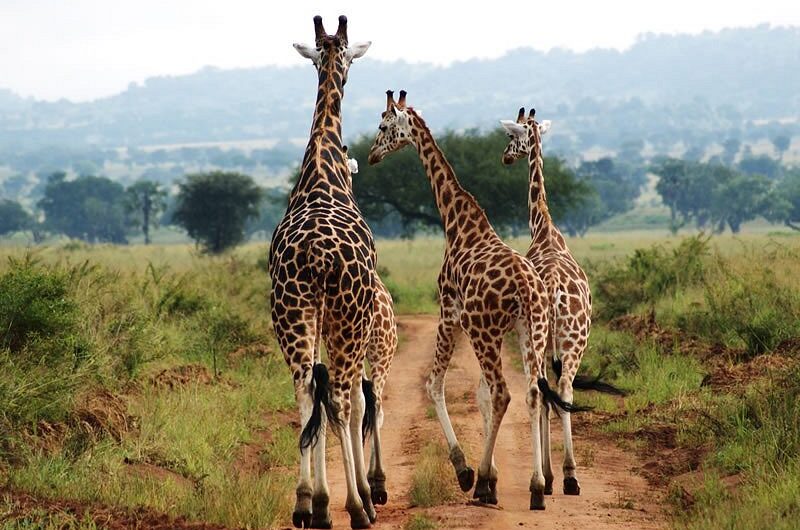
Wildlife: The park is composed of different vegetation zones and cover which attract different animal species for example it is composed of swamp vegetation along Lake Kyoga, woodland and savannah all of which support wildlife among the different animal species that can be seen include; hippopotamuses, Rothschild’s giraffe, warthog, Cape buffalo, Uganda Kob, Jackson’s-hartebeest, elephants and many more.

The park is also a home to over 400 bird species which offers birders a variety of bird species to look at and study in their natural habitats and some of these bird species may include the shoe bill, grey Crowned Crested Crane, the Giant King Fisher, Goliath Heron, Abyssinian ground hornbill, Nightjars Marabou stork and many more

Game drives: For tourists to see a variety of a number of animals then they should participate in game drives which are organized in the morning, evening and the night game drives can be carried out within the park and all of them offer the utmost experience since the tourists are able to see the different animal species. However one of the most memorable game drives that tourists should not miss out on is the night game drives which enable tourists to see the nocturnal animals like lions while they hunt for prey at night which is quite different from other game drives because many animals come out of hiding in the area.


Birding: The park is a destination for bird lovers because of the numerous bird species that are over 400 in number that they can see while on their Uganda National Parks tours in Murchison Falls National Park. Among the birds that can be seen include the water birds like the African fish eagle, Giant kingfisher, yellow billed stork, great cormorant and many more. Other bird species can be seen in the Budongo forest.


Murchison Fall: The park derives its name from the falls within the park called the Murchison falls or sometimes called the Kabalega falls. The falls offer a magnificent view to the tourists as they make their way through a narrow gorge forming violent falls which can be seen offering the best unique views. Important to note about the falls is the fact that they are in between two lakes Albert and Kyoga which offer amazingly breath taking views.

White water rafting: Adventure tourists will have a chance to carry out white water rafting on Murchison falls and because the falls offer rough waters and high speed running waters it makes them suitable for the activity to be carried out which involves tourists using an inflatable raft to navigate the white Nile with in Murchison Falls National Park which is another interesting activity while in the park.

Wildlife viewing: While on the River Nile, a variety of wildlife can be seen by tourists on their Murchison falls tour that is to say along the banks, animals like crocodiles can be seen sunbathing, buffalos, elephants waterbucks, and other animals are seen quenching their thirst from the waters along the banks.
Water Bodies: The park will catch the eyes of tourists who have embarked on their journey of carrying out a Uganda national parks tour because it is home to a number of water bodies that is to say, Lake Albert, Lake Kyoga and the Victoria Nile River which can be seen once the park is visited. The park offers a number of different activities while on the different water bodies as explained below;

Boat cruises: In the park, there are two different boat cruises or launch trips that are carried out that is the upstream boat cruise which is carried out at the bottom of the waterfalls which is the most powerful waterfalls in the country and in the area and the downstream boat cruise/ launch trip to the Victoria Nile delta which stretches t the shores of Lake Albert. All the launch trips/ boat cruises begin at Paara Jetty which is the starting point for all of them at 2:00 pm and it lasts for only 3 hours. Tourists will be able to see a number of animal species like the hippopotami, elephants, waterbucks, buffaloes, Kobs, Giraffes and bird species like the shoe bill, saddle-billed stork Goliath Heron and many more can be seen which offers breath taking views and satisfactory experiences for tourists o their Murchison falls national park tour.

Hiking: Murchison falls National Park is an important and rewarding destination to the tourists on their Uganda national parks tour because of the different activities that are engaging for the tourists and the most rewarding activity in the Park is top of Murchison Falls Hike which once carried out offers magnificent views of the national park. The hike to the top of the falls can be rewarding and it takes 45 minutes to reach the top but once reached, tourists will be able to see the white water of the falls running downstream, the sounds of the water running through the rocks which is quite impressing and unique. Tourists can hike through the vast landscape of the area and through the Kaniyo Pabidi Mahogany and Rabongo forests which is home to a number of primate species like the chimpanzees which can be seen jumping in the tree branches, monkeys can also be sighted in the forests.

Nature walks: For a tourist on their Murchison falls national park tour, nature walks in the park are rewarding because of the different attractions that can be seen once they are conducted and this will ensure that the tourist is able to get satisfied while on their Uganda national parks tour. Guided nature walks in the park are the most rewarding because a tourist is able to get detailed information concerning the areas visited and attractions that are seen. The walks in the park last for one to two hours and they can walk through the Kaniyo Pabidi and Rabongo forests where different animal species can be seen and different bird species. Short walks can also be carried out from Sambiya River Lodge or Mubako junction all of which offer amazing experiences.

ACTIVITIES IN MURCHISON FALLS NATIONAL PARK
Other attractions that can be seen by tourists while on their Murchison Falls National Park tour although are not found within the park but can be visited while on the Murchison falls national park tour include;

Ziwa rhino sanctuary: The Ziwa Rhino sanctuary was established in 2005 to avoid the extinction of the white rhinos in Uganda which were killed in kidepo and Murchison falls national park during the northern Uganda war which only left 6 rhinos in the country but with the efforts of the Rhino fund Uganda, the numbers have increased from 6 to 12 in 2015 and today the number of rhinos are 22 which keep on increasing. The sanctuary not only has Rhinos as the animal species but also other 40 animal species including the antelopes, crocodiles, monkeys, hippopotami and many more and also bird species which attract birders.


Rhino tracking: Tourists are able to see the rhinos closer at a distance of 6 metres which is safe enough for them while they see the different rhinos, their feeding patterns and so on. During the tracking of the rhinos tourists can take different pictures of the rhinos while in their habitats and so on and once the tourists visit the Sanctuary together with Murchison falls national park, all the big five animals are then seen that is the elephants, rhinos, leopard, lion and the buffalo


Birding: Although birding in the area is not popular like rhino tracking, the sanctuary offers a number of bird species that can attract birders, for example, Abdim’s stork, Blue spotted dove, Abyssinian ground hornbill, booted eagle, broad billed roller and so many others.
Nature walks: Through the sanctuary, nature walks can be carried out where a number of animal species can be seen while they walk through the sanctuary for example animals like the Oribi, reedbucks, bushbucks, duikers and so on are seen within.
Budongo Forest Reserve: From Budongo forest, Murchison falls national park is 47 kilometers which can be accessed in about 30 minutes the forest is the biggest Mahogany forest in the whole of East Africa which. The forest has a variety of animal species that can attract tourists on their Murchison falls national park tour. The forest is home to a number of bird species and chimpanzees, lions, buffalos which have attracted tourists while on their tour.


Chimpanzee trekking: Budongo forest has over 500 chimpanzees that can be trekked, the activity involves tourists going into the natural habitats of the chimpanzees in order to understand their patterns of living, for example, feeding patterns how they co-exist with one another, their co-existence with the forests and so on which is quite rewarding once carried out.
Birding: The forest is habitat to a number of bird species like which can be seen in the trees making their nests. Some of the species include; Sabine’s Spinetail, Cassin’s Spinetail (rare), Pygmy Crakes, Kingfishers, White-spotted Flufftail, Ituri Batis, Puvell’s Illadopsis, Brown Twinspot, Cameroon Sombre Greenbul, Cassin’s Hawk-eagle, Crowned Eagle.


ACCOMMODATION IN MURCHISON FALL NATIONAL PARK
Tourists on their Murchison falls national park tour will have a chance to choose from the different classes of accommodation depending on their budget each of the accommodation facilities that are chosen regardless of their classes are able to ensure; visitor satisfaction with top-notch services like bar services, dining services, 24 hour room services which enable quality service delivery.

Budget Accommodation

Murchison backpackers
Saltek forest cottages
Mama Washindi lodge
Grassroots cottages and tours
Mid-range Accommodation

Pakuba Safari Lodge
Budongo eco-lodge
Sambiya River Lodge
Fort Murchison Lodge
Luxury accommodation

Paraa Safari Lodge
Chobe Safari Lodge
Nile safari lodge
Baker’s lodge
As part of their Uganda tour, tourists on their Murchison Falls National Park tour will have a chance to experience nature’s best when it comes to visiting National Parks which will offer magnificent views of the popular Murchison falls, a number of animals including four of the big five and many more.